Why are high-altitude wines so good?
High-altitude wine can be very good indeed, but it’s not because of the lack of oxygen. There are a number of factors that come into play in the Andean foothills of Argentina in particular that make the wine special. However, there are also some great high-altitude wines being produced in the Elqui and Aconcagua Valleys of Chile and around the cities of Tarija and Potosi in Bolivia. Plus, in the Sacred Valley of Cusco in Peru, there are now two vineyards also.
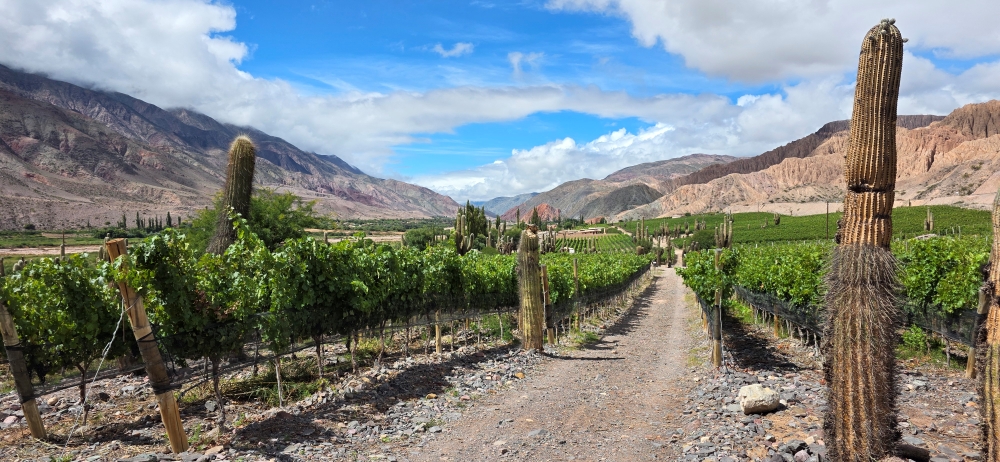
1. Very broad daily temperature range
The difference between the warmest and coldest temperatures on any given day is called the diurnal range. In Burgundy, France, the average diurnal temperature range is around 10 °C, while in Salta, Argentina, it is often in excess of 20 °C. Generally, the higher you climb, the greater the diurnal temperature range.
In the high daytime temperatures found in many parts of the “New World,” the vine producing high-altitude wine is working frantically to ripen grapes into high-sugar-content capsules. Then, as the temperature drops at night, the sugar production is paused and the plant is able to balance the sugar with the retention of acidity, thereby producing a very balanced structure. The ripening of the grape can carry on for extended periods with this stop-start process, leading to a very well-rounded wine, as long as the agronomist and winemaker know what they are doing, of course!

So the more extreme the temperature difference combined with a long growth season, the greater the sugar content, the higher the potential alcohol content, the thicker the skin becomes and the greater the concentration of many of the components within the grapes. The resulting wine will also have a deep colour and plenty of body, and should be well balanced.
2. High-quality sunlight – and lots of it.
At altitude in the Andes, sunlight is very high quality indeed, due to the reduced atmospheric interference. Plus, it is sunny for a long time each day, especially in the spring and summer growing period, and also over many days of the year. For example, San Juan in Argentina has 320 sunny days a year.
With this intense sunshine comes a defence mechanism whereby the high-altitude wine grape increases the thickness of its skin to protect itself from the strong UV rays and shrivelling effects. Skins will develop more pigment and tannins, to such an extent that often the grapes will appear black. This extra pigment, tannin, and alcohol mean a fuller-bodied wine, with ripe and over-ripe fruit notes and some spices.

3. Steep angle and wind.
The steeper angle of the Andes foothills means that bunches of grapes have a direct line of sight with the sun, increasing even more the effects mentioned above. This angle, combined with the poor-quality rocky or sandy soils which increase drainage, means that vines really have to struggle for nutrients and water. This increases the intensity of the reduced harvests that are produced as a result of this struggle. As a temperature change happens in the afternoons in this part of the world, the wind generally picks up. A moderately windy vineyard is a healthy vineyard, as pests and plagues cannot take hold.
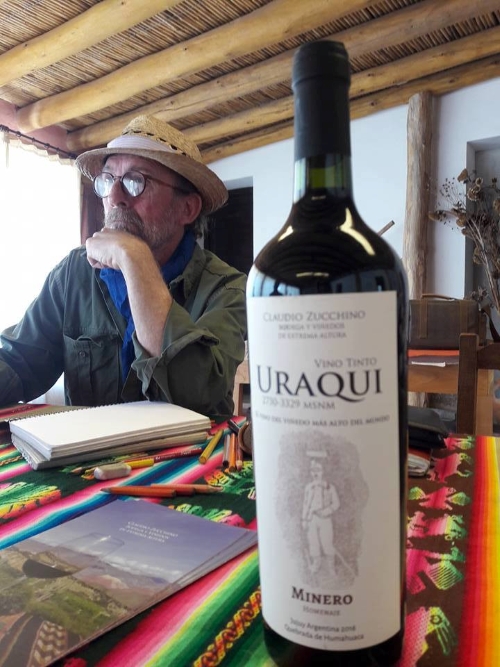
The list below can and will be disputed, with possibly the new highest vines in the world coming from the Humahuaca Canyon in Jujuy, Argentina, at 3300 meters.
Top 5 highest vineyards in the world:
Since we posted this chart, it seems that there might be an even higher winery in Nepal. However, is this located in a commercially viable wine region, or is it just a gimmicky one-off winery? The wine regions in the list below have plenty of wineries nearby and are well established in the markets.
| Rank | Country | Region | Winery | Altitude ft. |
| 1 | Argentina | Humahuaca Canyon | Viñas de Uquia | 10,800 |
| 2 | Argentina | Calchaquí Valley | Colome | 10,200 |
| 3 | Chile | Elqui Valley | Falernia | 8,200 |
| 4 | China | Yunnan Province | LVMH | 8,100 |
| 5 | USA | West Elks, Colorado | Terror Creek | 6,400 |